Bootstrapping vs venture capital: how small Western startups grow without investors
83% of US business owners started on their own or family money, and about 5% received venture capital. We look at how much equity an investor costs, how companies reach millions without one and how to apply this in Ukraine.
83%
started on their own or family money
~5%
received venture capital
19,5%
of the company is given away in the first round, median
01 · Overview
Venture capital is the exception, not the rule
Startups usually make the news when they raise millions from funds. That makes it seem impossible to build a business without an investor. The statistics say otherwise: most Western companies start on their own money and grow on revenue from customers. This path is called bootstrapping.
- Bootstrapping
- The business grows on the founder's own money and on revenue from customers. The whole company stays yours.
- Venture capital
- A fund gives money in exchange for a share of the company. It makes money when the company grows many times over and is sold or goes public.
- Grant
- Money from the state or a programme without taking a share of the company, but with conditions. In Ukraine, for example, «Vlasna Sprava» (Own Business).
Fun fact
A ~$12B company without a single investor
Mailchimp, an email marketing service from Atlanta, was founded in 2001 without outside funding, and the company never brought on investors. In 2021 Intuit agreed to buy it for about $12B in cash and stock. At that point Mailchimp had 800 000 paying customers and 13M users. In November 2026 Intuit agreed to sell Mailchimp to Bending Spoons for $3,68B; the deal is expected to close in early 2027.
02 · Numbers
Where startup money comes from
The latest data comes from the EPOP:2024 survey by NORC at the University of Chicago, funded by the Kauffman Foundation. In 2024 it surveyed 3 894 business owners who needed money to start.
Share of owners who got money from the source
USA, 2024. One owner could use several sources.
The NORC report text rounds the venture share to 5%, while the table shows 4,2%. Both say the same thing: roughly one in twenty gets an investor. Venture capital also provided only about 5% of all startup money. This matches older data: in 2016 the Kauffman Foundation wrote that less than 5% of startup funding comes from venture funds.
83 of 100
US business owners started on their own or family money
~5 of 100
got money from a venture fund
03 · The price of VC
Investor money is paid for with equity
Venture money isn't repaid like a loan. You pay for it with a share of the company, and with every round your share gets smaller. Carta, the service startups use to keep their cap table, measures this across thousands of real deals.
19,5%
of the company is given away in the first (seed) round, median across 5 118 deals (Carta data, August 2025)
18%
is given away in the next round, Series A, median per Carta data (August 2025)
~53%
of the company goes to investors in total over rounds from seed to D at 2026 medians (at 2019 medians it would be ~66%)
$19,7M
median company valuation in a seed round in 2026
Choose the number of rounds, the share you give away in each, and the sale price of the company. The calculation is simplified: no option pool for the team and no special investor terms.
Your share
51%
You'll get at the sale
$5,1M
What to compare before choosing
04 · Cases
From a solo founder to billions without a fund
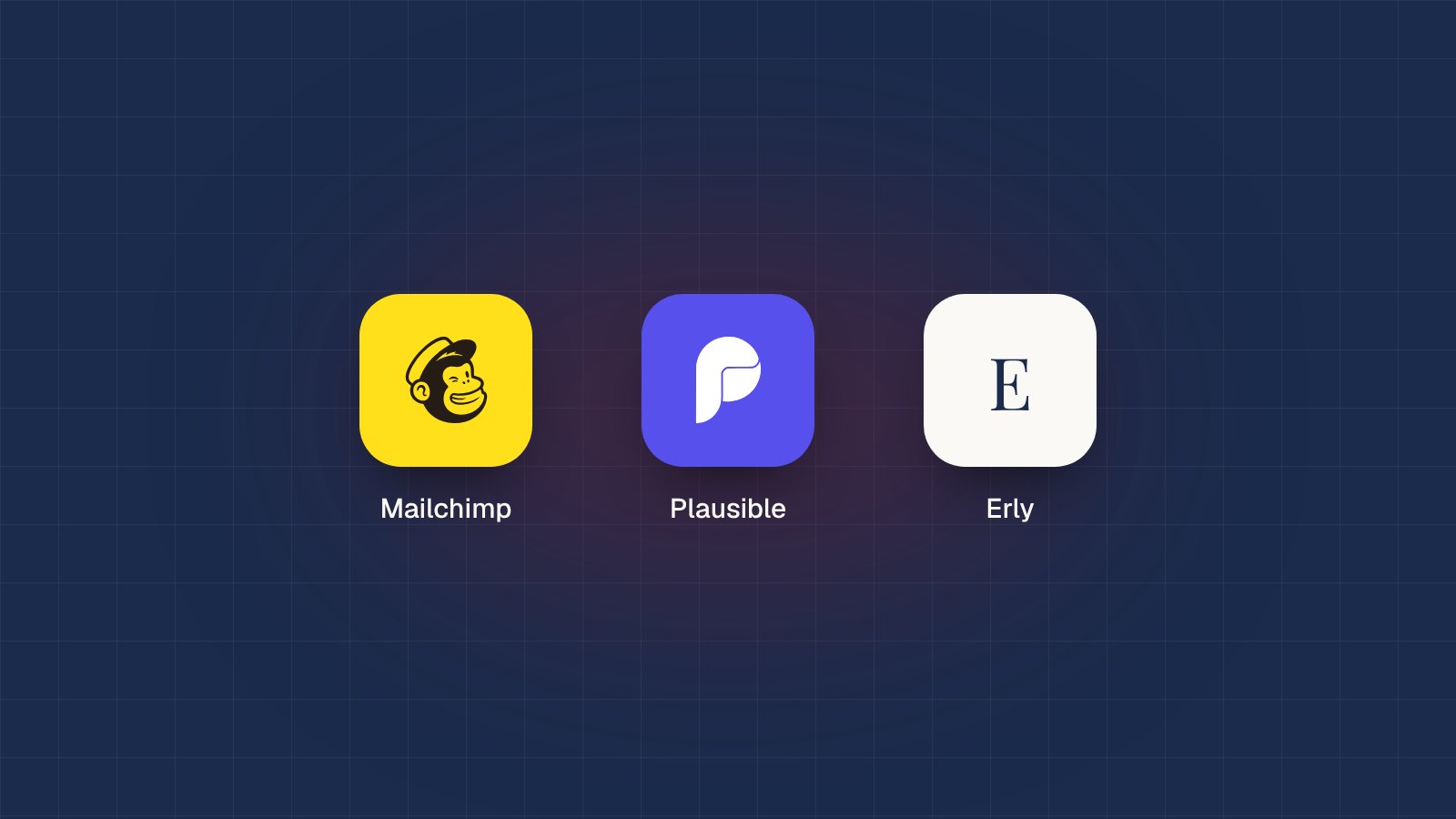
Three Western companies of different scale. For Erly we found no mention of investors in open sources, but no direct statement about bootstrapping either.
What they have in common
- 01The customer pays, not an investor. Plausible charged from its first subscriber in May 2019.
- 02A long, slow start. Plausible took 324 days to reach its first $400 in monthly revenue, and the founders lived for several months without salaries on personal savings, losing more than $50 000 between them.
- 03A small team. Erly's founder launched the app on his own, and Plausible is now 11 people.
- 04Their own acquisition channel: open source and a blog (Plausible), social video with creators (Erly).
05 · Ukraine
How to grow without an investor in Ukraine
Good news for a Ukrainian founder: launching a product has become cheaper, and the state gives grants that don't require giving up a share of the company.
up to UAH 500K
«Vlasna Sprava» start grant with bonuses; base UAH 100–300K
€20–40K
Ukrainian Startup Fund grants in the Startup EDGE programme for pre-seed and seed
The updated «Vlasna Sprava» runs from 1 September 2026. Bonuses: +5% for ages 18–25, +20% for veterans, IDPs, VAT payers, holders of an invention patent and those who create 2 jobs, +30% for frontline regions, +50% for priority sectors. The current application stage in Diia ran until 27 October 2026, so watch for the next one. Applications for Startup EDGE closed on 20 March 2026.

Plan: bootstrapping step by step
3 risks
- 01Slow growth. A competitor with an investor can copy the idea and buy ads you don't have the money for.
- 02Personal money at risk. Plausible's founders together lost more than $50 000 of their own savings at the start.
- 03Grants come with conditions. The Diia service page lists creating jobs, depending on the grant size, among the mandatory conditions, so read all the requirements before applying.
06 · Verdict
When to take an investor, and when not?
Most small businesses don't need an investor. It's for those to whom money gives speed that revenue can't buy.
Mailchimp and Plausible show that customer money can take you from zero to millions. Venture capital makes sense when a product brings no revenue for years, or when the market goes to whoever spends millions first. In other cases you'll give away about half the company for speed you don't necessarily need.
Bootstrapping fits if
- 01A customer can pay you for the very first version.
- 02The first version can be built in a few weeks for a few hundred dollars.
- 03You have a free channel to customers: a community, content or personal contacts.
When to look for an investor: the product needs expensive development or equipment before the first customer, and savings plus a grant aren't enough.
Sources
All pages were opened on 25.11.2026. Company figures come from their websites, interviews and reports; there is no independent audit.
- NORC, Start-Up Capital for U.S. Business Ventures: Evidence from EPOP:2024, December 2024
- Kauffman Foundation, Three facts about venture capital and entrepreneurship, May 2016
- Carta, Less Than 10 Percent of Seed Rounds Sell 30 Percent or More, August 2025
- Carta, State of Private Markets: Q3 2026, November 2026
- Mailchimp, Intuit to Acquire Mailchimp, September 2021
- Bending Spoons, Bending Spoons to acquire Mailchimp from Intuit (SEC, Form 6-K), November 2026
- TechCrunch, Intuit confirms $12B deal to buy Mailchimp, September 2021
- Wikipedia, Mailchimp
- Plausible Analytics, About
- Plausible Analytics, blog post on bootstrapping
- Interview with Erly's founder, July 2026
- Ministry of Economy of Ukraine, «Vlasna Sprava»: updated, May 2026
- Diia, Starting and scaling your own business
- Forbes Ukraine, Ukrainian Startup Fund: second wave of Startup EDGE, February 2026
Enjoyed the article? Let's continue on Telegram
We'll discuss how to grow without an investor, share new cases and let you know when the next article comes out.
New articles first
Teardowns, ideas and trends in the channel right after release.
Discussion
Ask questions and share ideas with like-minded people and other entrepreneurs.
Reminders and digest
The week's highlights, so you don't miss anything.